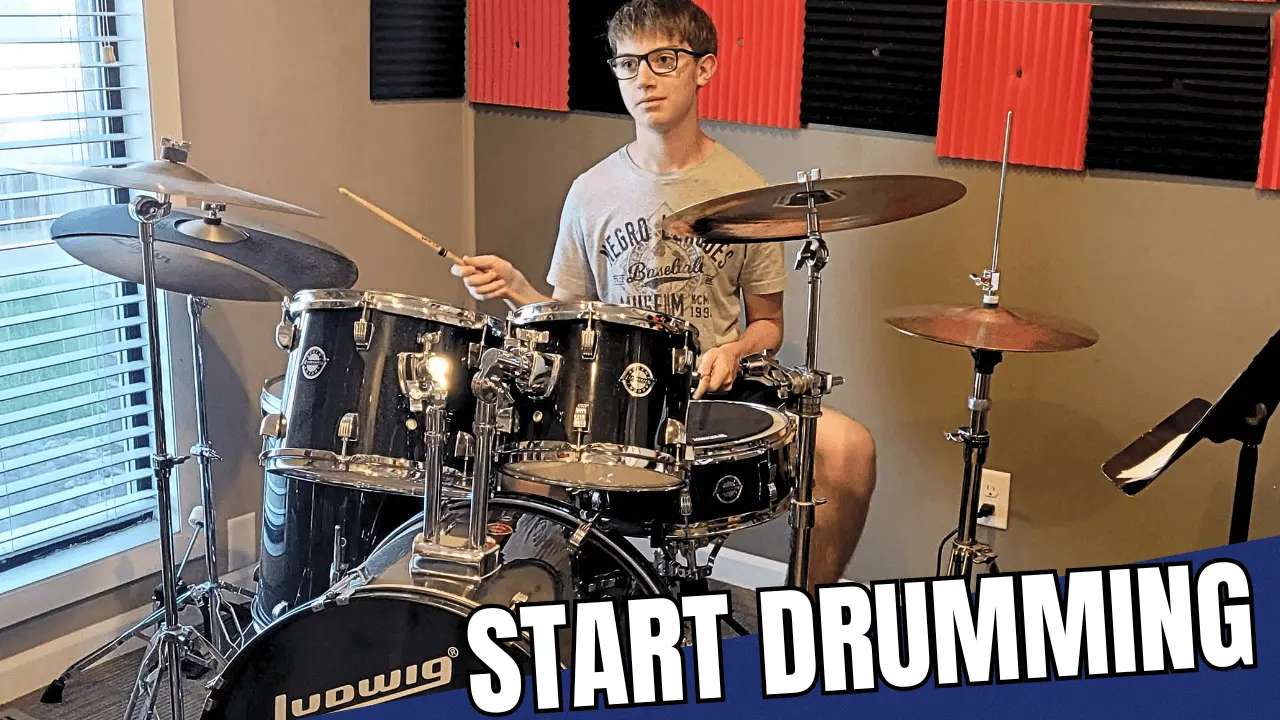
If your kid wants to play drums across Southwest Omaha, from the bustling streets near Aksarben Village to the family-friendly neighborhoods of Millard, understanding drum notation can feel like deciphering a secret code. But imagine being able to play along with your favorite songs or learn complex rhythms just by looking at a page!
This guide is designed to demystify drum sheet music, breaking down the essential symbols and concepts so you can confidently read and play rhythms. It's the first step to unlocking your full potential behind the kit, whether you're jamming in a garage band or aiming for a spot in the Millard Public Schools band program.
The Drum Staff: Your Rhythmic Blueprint
Unlike other instruments that use a traditional five-line staff to denote pitch, drum notation uses a percussion staff to indicate which drum or cymbal to hit. Each line and space corresponds to a specific part of your drum kit. For instance, the bass drum is typically on the bottom space, while the snare drum often sits on the third space from the bottom. Understanding this layout is crucial for any Omaha drummer looking to translate dots and lines into beats.
Think of it as a map for your hands and feet. The hi-hat is usually represented by an 'x' on the top space, and cymbals might be above the staff. As you practice, this visual representation becomes second nature, allowing you to quickly identify where each stroke should land. It’s a fundamental skill that will serve you well, whether you're practicing at home in Dundee or preparing for a performance near the UNO campus.
Decoding Note Values and Rests
The duration of each drum hit or silence is indicated by note values and rests. Whole notes last for four beats, half notes for two, quarter notes for one, and so on. Rests correspond to these durations, telling you when *not* to play. Mastering these basic time values is like learning the alphabet of rhythm; it allows you to construct complex musical sentences.
Many beginner drummers in the La Vista area start by clapping out rhythms before attempting them on the kit. This helps internalize the timing. Understanding how these notes and rests combine is key to playing in time and with other musicians. It’s a skill that builds precision and musicality, essential for any drummer wanting to contribute meaningfully to a band.
Dynamics and Articulation: Adding Expression to Your Playing
Drum notation isn't just about *what* to play and *when*; it also tells you *how* to play it. Dynamics, like 'f' for forte (loud) or 'p' for piano (soft), indicate the volume. Articulations, such as accents (>) or ghost notes (parentheses around a note), provide instructions on how to strike the drum for different sounds. These symbols add character and emotion to your drumming.
Incorporating dynamics and articulation transforms a robotic beat into a musical phrase. Imagine the difference between a simple beat and one that breathes with subtle nuances, like the vibrant music scene you might find in Midtown or Benson. Paying attention to these details will elevate your playing and make you a more expressive and sought-after drummer in the Omaha music community.
Drum Lessons in Omaha
Private one-on-one lessons, all ages, all levels. No long-term contracts.
Email adkinsguitarandmusic@gmail.com.
Sign Up for Drum Lessons →Helpful Next Steps
Not sure which lesson is right? Start with your closest studio and the instrument your student is most excited to try.
Have a question first? Email adkinsguitarandmusic@gmail.com — Zach reads it himself.
Powered by: ZiroWork helps organize the systems behind this site.