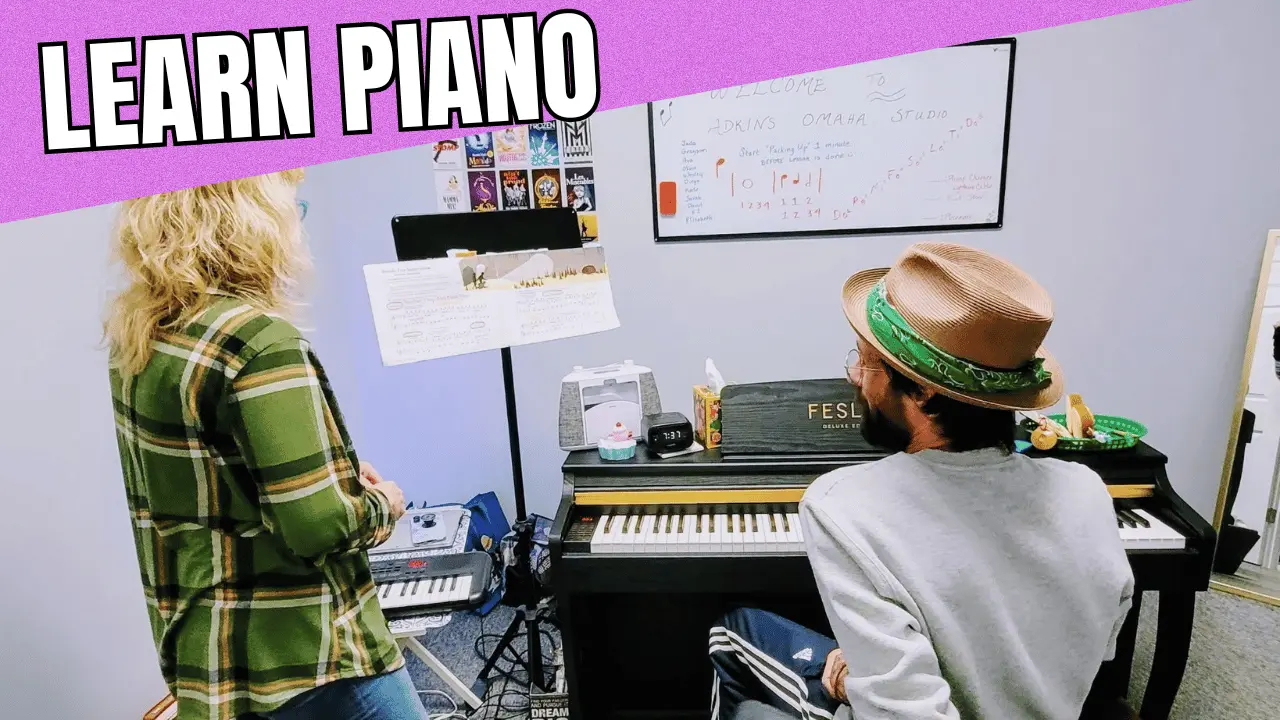
Whether you're a budding pianist in the Millard Public Schools district or an adult learner exploring the vibrant music scene near Aksarben Village, mastering proper piano posture is crucial. It’s not just about looking elegant; it’s about preventing strain and building a solid technical foundation that will serve you for years to come.
Many new students underestimate the impact of how they sit at the instrument, but correct alignment can unlock greater fluidity, power, and endurance, making your practice sessions more effective and enjoyable. Let's explore the what matters of optimal piano posture.
The Foundation: Bench Height and Distance
Just like a strong foundation supports a building in Midtown, your bench setup is paramount. Your forearms should be parallel to the floor when your fingers are resting on the keys. If your bench is too low, you'll hunch; too high, and your shoulders will tense. Adjust the bench so your elbows are slightly above the keyboard level, allowing gravity to assist your arm weight.
Next, consider the distance. You should be close enough to comfortably reach all the keys without leaning excessively, but far enough that your arms have room to move freely. A good rule of thumb is that your knees should be slightly under the keyboard, and your feet flat on the floor or on a pedal extender if needed. This ensures stability and balance, essential for dynamic playing.
Spine Alignment: From Dundee to Westroads Mall
Think of your spine as a flexible column, not a rigid rod. Sit tall, as if a string is gently pulling you upwards from the crown of your head. Your shoulders should be relaxed and down, not hunched up towards your ears. Avoid leaning forward or slouching back; a neutral spine allows for maximum breath support and freedom of movement, crucial for expressive playing.
This relaxed yet upright posture is vital for students across Omaha, from those attending classes near the UNO campus to families in the Westroads Mall area. It prevents tension in the neck and back, common complaints among pianists with poor habits. A healthy spine means more comfortable practice and a longer, more enjoyable path in music.
Arm and Hand Position: The Keys to Effortless Playing
Your arms should hang naturally from your shoulders, with a slight curve in your elbows. Avoid locking your elbows or pressing them against your body. This allows your arms to act as a natural extension of your torso, transferring weight and power efficiently to the keys. Your wrists should be relatively flat, neither drooping nor sharply angled upwards, maintaining a straight line from your forearm through your knuckles.
For your hands, imagine holding a small, soft ball. Your fingers should be curved and relaxed, ready to strike the keys with precision and control. Avoid collapsing your fingers or playing with flat hands, as this restricts agility and can lead to injury. This relaxed, curved hand shape is a hallmark of good technique taught in quality music programs throughout the Omaha area.
Piano Lessons in Omaha
Private one-on-one lessons, all ages, all levels. No long-term contracts.
Email adkinsguitarandmusic@gmail.com.
Sign Up for Piano Lessons →Helpful Next Steps
Not sure which lesson is right? Start with your closest studio and the instrument your student is most excited to try.
Have a question first? Email adkinsguitarandmusic@gmail.com — Zach reads it himself.
Powered by: ZiroWork helps organize the systems behind this site.