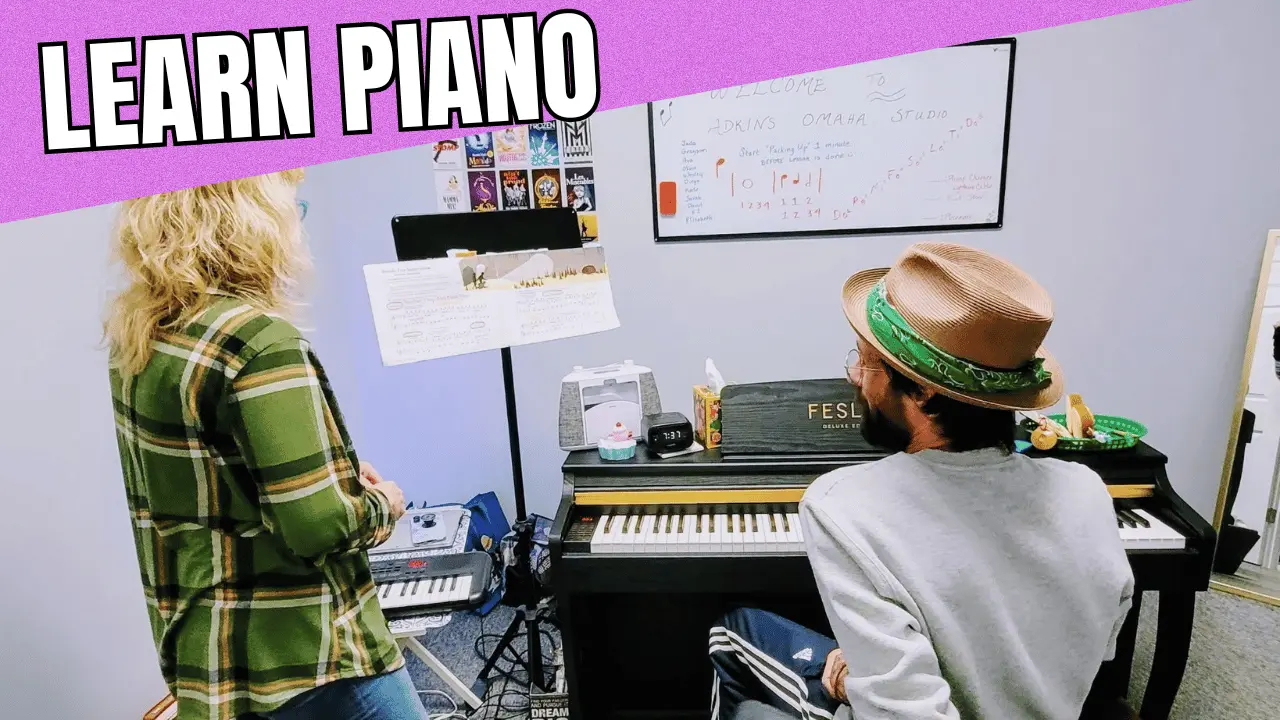
In the vibrant music scene of Omaha, from the budding talents at Millard Public Schools to the seasoned performers in Aksarben Village, mastering the piano with both hands is a pivotal step for any student who wants to play. It's a common hurdle, yet one that unlocks a musical expression, allowing you to play richer harmonies and more complex melodies. Whether you're just starting your piano journey or looking to refine your technique, understanding how to coordinate your hands is key to unlocking your full potential right here in our community.
This guide will break down the process of playing piano with both hands into manageable steps, offering practical advice and exercises that will help you develop coordination, independence, and musicality. We'll explore foundational techniques, effective practice strategies, and how to integrate these skills into your daily routine, ensuring a smooth and rewarding learning experience.
Understanding Hand Independence: The Foundation
Before you can play intricate pieces with both hands, it's crucial to develop a sense of independence between them. This means each hand can execute its part without being overly influenced by the other. Many students in the Dundee neighborhood or near the UNO campus often find their hands wanting to move in unison, but true piano mastery requires them to work together while performing distinct roles. Think of it like a conversation where each hand has its own voice, contributing to the overall dialogue.
To build this foundation, start with simple exercises that isolate each hand. Practice scales and arpeggios with your right hand alone, focusing on evenness and rhythm. Then, do the same with your left hand. Once comfortable, introduce exercises where one hand plays a steady rhythm while the other plays a melody. This gradual approach helps your brain process the independent movements required, setting the stage for more complex coordination.
Step-by-Step Coordination Exercises
Developing two-hand coordination requires a systematic approach. Begin by playing simple melodies with your right hand and basic chords or single notes with your left. A great starting point for students in the Westroads Mall area is to use familiar nursery rhymes or simple folk songs, as the melodies are often straightforward and the left-hand accompaniment can be kept minimal. Focus on accuracy and a steady tempo, even if it's very slow.
As you gain confidence, gradually increase the complexity. Introduce exercises where the left hand plays a bass line while the right hand plays a melody, or try simple counterpoint where both hands play melodic lines that move independently. Remember, consistency is more important than speed. Regular, focused practice sessions, even short ones, will yield better results than infrequent, long ones. Consider practicing with a metronome to ensure rhythmic precision, a skill highly valued by music educators across Omaha.
Integrating Technique into Musical Pieces
Once you've built a solid foundation in hand independence and coordination, the next step is to apply these skills to actual musical pieces. Start with beginner-level pieces that are specifically designed for two-hand coordination. Many method books used in local music schools, including those serving the Millard area, introduce two-hand playing early on with carefully graded repertoire. Don't be afraid to break down complex sections into smaller, more manageable parts.
Practice each hand separately for challenging passages, then slowly bring them together. Pay attention to dynamics, phrasing, and articulation – these musical elements truly bring a piece to life. As you progress, you'll find that the techniques you've developed will allow you to tackle more advanced repertoire, from classical sonatas to contemporary jazz pieces, opening up endless possibilities for your path in music in Omaha.
Piano Lessons in Omaha
Private one-on-one lessons, all ages, all levels. No long-term contracts. Sign up today at our Omaha studio.
Email adkinsguitarandmusic@gmail.com.
Sign Up for Piano Lessons →Helpful Next Steps
Not sure which lesson is right? Start with your closest studio and the instrument your student is most excited to try.
Have a question first? Email adkinsguitarandmusic@gmail.com — Zach reads it himself.
Powered by: ZiroWork helps organize the systems behind this site.